This is a website exclusively for professionals, if you are a private customer and you are interested in our products, do not hesitate to contact us and we will indicate your nearest distributor.


AquaChek Salt Test Strips

Reference: SAL

AquaChek pool salt test strips, designed to check the concentration of sodium chloride in systems using salt chlorination. The pack contains 10 test strips with a measurement range of 400 to 7,000 ppm. The result is obtained in a few minutes using the scale provided on the pack itself, making it easy to monitor the salt level in the water on a regular basis.

Units per box: 1

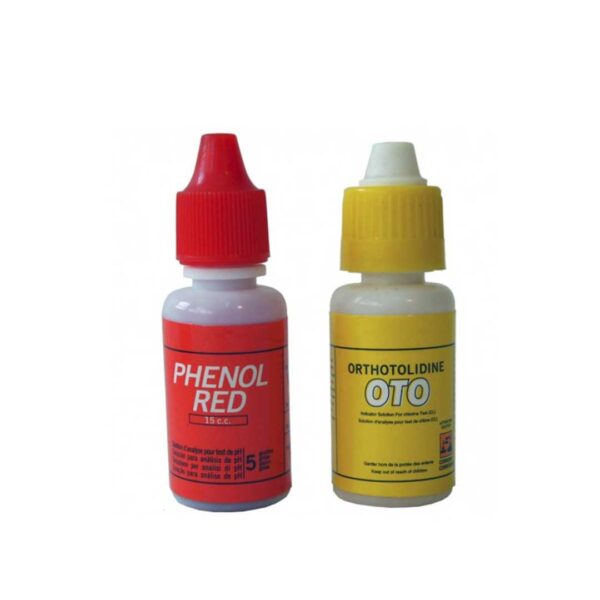
Complete your order with 3 in 1 Test Kit (pH - Cl - Alkalinity) y Test kit basic for pH & Cl measurement 15 ml.

Reference: SAL Categories: , Tags: ,

Product information

AquaChek test strips for measuring pool salt levels

AquaChek salt test strips enable you to check the concentration of sodium chloride in the water of swimming pools fitted with salt chlorination systems.

Knowing this value helps the professional to check whether the concentration is within the recommended operating range for the installed equipment. An incorrect level may affect the system’s ability to produce the required amount of chlorine.

Measuring range

The test strips can be used to measure concentrations within the following range:

400 and 7,000 ppm of sodium chloride —NaCl—.

The scale covers the typical operating levels of many salt electrolysis systems. The correct value must always be determined by consulting the specifications of the installed chlorinator, as not all units operate at the same salt concentration.

How to use salt test strips

  1. Collect a water sample in a small, clean container free from any traces of chemicals.
  2. Fill the container with approximately 2.5 cm of water.
  3. Insert only the lower part of the strip into the sample.
  4. Keep the upper half of the strip completely dry.
  5. Wait until the top yellow band darkens, usually between 3 and 4 minutes.
  6. Remove the strip and identify the highest point reached by the white area.
  7. Compare the figure obtained with the table printed on the packaging.

Each pack comes with a chart relating to the strips it contains, so you must always use the scale on the original container.

Recommended applications

These strips are suitable for:

  • Swimming pools with salt-based chlorination.
  • Checks to be carried out during the commissioning of the chlorinator.
  • Regular maintenance checks.
  • Check after adding salt.
  • Diagnosis of alerts relating to low or high salinity.
  • Checks carried out by fitters and technical services.

Advantages of test strip analysis

  • It does not require a mains power supply.
  • It does not require any liquid reagents.
  • It gives you a result in just a few minutes.
  • It has a wide measurement range.
  • It is easy to transport during maintenance visits.
  • Each strip is designed for a single measurement.

Care instructions

Keep the container tightly closed and store it in a cool, dry place. Do not touch the measuring areas with wet fingers and ensure that no water gets into the container.

Used test strips must be discarded and must not be used for a second test.

Warnings

This product measures only the concentration of salt or sodium chloride. It is not a substitute for analysing other parameters required for water maintenance, such as:

  • pH.
  • Free chlorine.
  • Alkalinity.
  • Stabiliser.
  • Hardness.

The result should be compared with the salt range recommended by the manufacturer of the salt chlorinator installed.


You may also be interested in

News

Featured articles to improve your pool or your customers' pool

How to choose a salt chlorinator based on the volume of your swimming pool in cubic metres

Which salt chlorinator do I need, based on the volume of my swimming pool in m³?

Cubic metres are the starting point, but they are not enough on their own. To choose the right salt chlorinator, you need to ….
Read more →

How to prime a swimming pool pump and remove air from the circuit

The pump starts up, the motor is running, but the water isn’t circulating properly. When looking through the cover of the ….
Read more →
A professional working out which heat pump a swimming pool needs

What sort of heat pump do I need for my swimming pool?

To work out what sort of heat pump a swimming pool needs, we need to know its volume in cubic metres, the temperature we want to achieve, the ...
Read more →
TRYPOOL

Privacy Overview

This website uses cookies so that we can provide you with the best user experience possible. Cookie information is stored in your browser and performs functions such as recognising you when you return to our website and helping our team to understand which sections of the website you find most interesting and useful.